Thông tin thị trường
Thai newspaper admires Vietnam’s wise rice strategy
15/07/2021 | 19:52:35
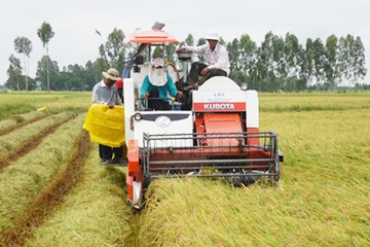
The Thai newspaper said that the country needs to learn from the way Vietnam operates policies and strategies to match the current rice market developments.
The Thai newspaper said that the country needs to learn from the way Vietnam operates policies and strategies to match the current rice market developments.
Bangkok Post (Thailand) has just published an article titled "Vietnam's wise rice strategy", the world's second-largest rice exporter.
The article said that the price of Vietnamese rice is currently higher than that of Thailand, which is still highly priced. The reason is that Vietnam has signed the EVITA agreement, opening the door to the European market.
At the same time, the recently signed RCEP Agreement will also open up more markets for higher priced rice.
According to Bangkok Post, Vietnam is in a good position to take advantage of these opportunities and work to improve the quality and variety of its rice.
In addition to producing a variety of high-quality fragrant rice, Vietnamese researchers are also developing new varieties of line with market trends such as soft-grain white rice, reorganizing production methods, improving food safety, and improving food safety. Food safety and quality management, increase productivity.
These efforts have resulted in higher productivity, better brand recognition and praise from consumers around the world. For example, winning the title of World's Best Rice at the World Rice Trade Conference 2019.
Thailand used to be the world's largest rice exporter, but has now dropped to third place after India and Vietnam. Thailand needs to learn from how Vietnam adjusts its trade to match market developments.
Thai rice has fallen out of favor in recent years as consumers turn to softer varieties. The country risks falling to fifth place over the next decade if it remains complacent and fails to develop a more diversified and competitive long-term rice strategy.
There are some positive signs that policymakers are acting on change. It was last year that Commerce Minister Jurin Laksanawisit announced a five-year strategy to accelerate the development of 12 new varieties of rice, including four hard-grain white rice, four soft-grain white rice, and two fragrant HOM rice varieties. Mali of Thailand and two highly nutritious rice varieties.
However, Thailand will need to do more to regain its position as the world's largest rice exporter.
In addition, Thailand's yield has also lagged behind its regional competitors for many years as the local rice yield is around 450 kg/RAI (1 RAI equivalent to 1,600 m2) compared to 960 kg in Vietnam and 2 tons of China.
“The way Thailand can find a way out of the economic crisis caused by COVID-19 is to build its advantage as a food producing country by adding value and improving efficiency.” , page Bangkok Post review